If you have ever opened the pool cover after a fall storm and seen brown oak leaves carpeting the floor, you already know why “best robotic pool cleaner for leaves” is one of the most searched pool questions every autumn. Leaves are not like dust or pollen. They sink fast, they tangle around drains, they stain plaster, and they break down into the fine sediment that wrecks water clarity within days.
A regular floor vacuum is not built for that. Skimmers help on the surface but do nothing once leaves settle. And a lot of cheaper “robotic” pool cleaners are really just floor crawlers with a single-layer mesh basket that clogs the moment a maple leaf folds the wrong way.
So which models actually handle leaf-heavy pools without choking, missing spots, or needing a mid-cycle filter clean? Over the past several months, our team has gone deep on three of the most commonly recommended cordless options: the Aiper Scuba S1, the WYBOT C1, and the Beatbot AquaSense 2 Pro. This guide explains which one is genuinely the best robotic pool cleaner for leaves, why the other two still have their place, and what to look for if you are shopping further down the price scale.
Quick Answer: The Best Robotic Pool Cleaner for Leaves in 2026
If you only want the short version, here it is.
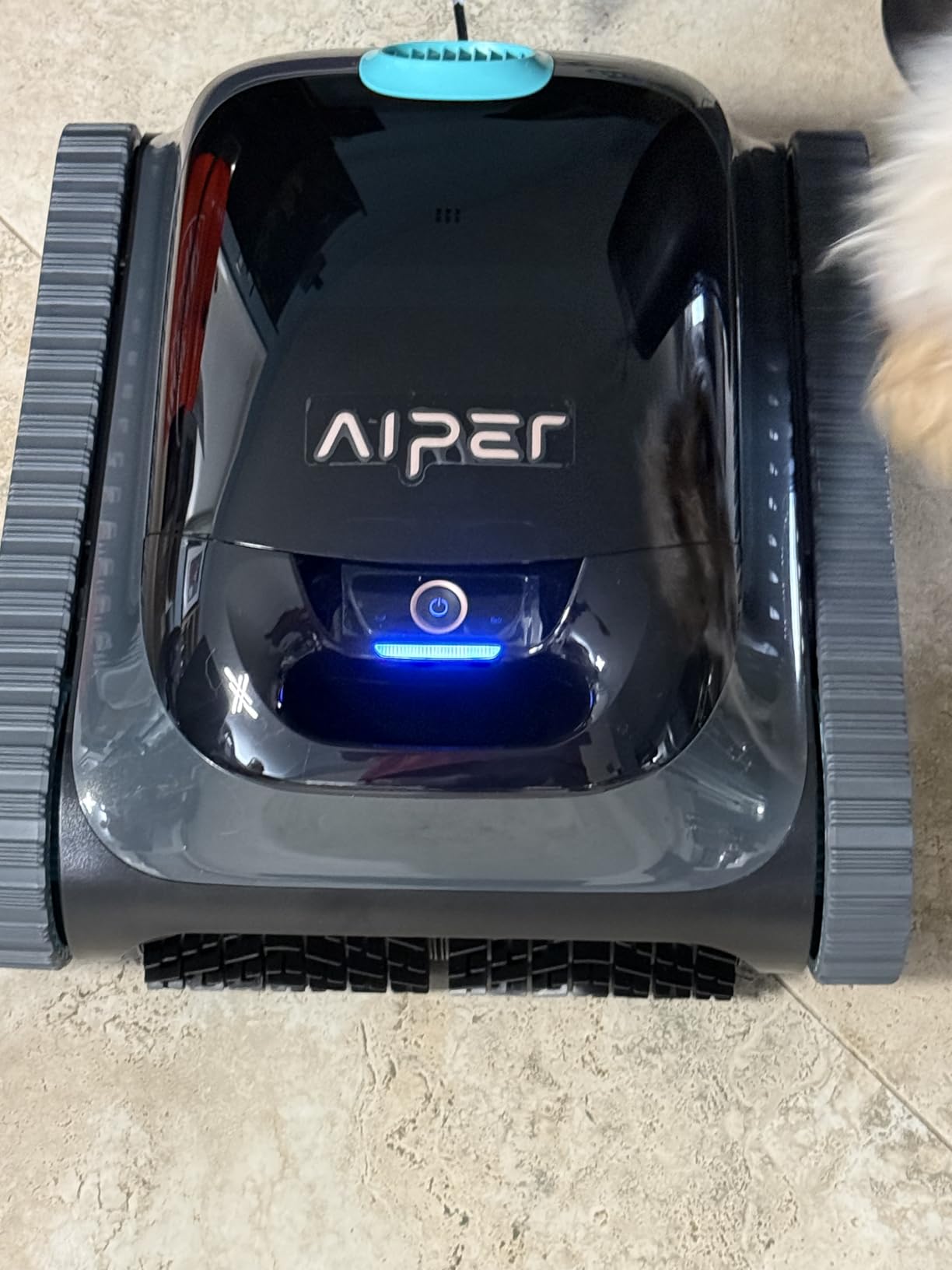
The Aiper Scuba S1 is the best robotic pool cleaner for leaves in 2026 for most residential pools. It pairs a 3.5-liter waste bin with dual-layer filtration (180 micron outer plus 3 micron inner), strong wall and waterline cleaning, and an adaptive path planner that handles flat, sloped, bowl, and diamond pool floors without getting stuck on debris piles. For leaf-heavy backyards, that combination beats anything else in the same price tier.
The Beatbot AquaSense 2 Pro is the best premium pick for very large pools, kidney shapes, and homes where surface leaves are part of the daily mess. The surface-skimming mode is a real differentiator, and the 5-in-1 system handles floor, walls, waterline, surface, and water clarification.
The WYBOT C1 is the best value pick for smaller inground pools where leaf load is moderate. It is not the strongest debris specialist, but at its price tier it is hard to beat for routine cleanups.
If your pool sits under oaks, pines, sycamores, or anything else that drops volume year-round, scroll down to the Aiper Scuba S1 section first.
Why Leaves Are Harder for Pool Robots Than Most Buyers Realize
Marketing copy makes it sound like every cordless pool robot can handle leaves. The reality is more selective. Three things determine whether a robotic pool cleaner actually works in a leaf-heavy pool, and most cheaper models fail on at least one of them.
The first is filter capacity. A 3.5L bin like the Aiper Scuba S1 holds around two to three times more leaf volume than the small mesh baskets on entry-level models. When the bin fills, suction drops and the robot stops collecting properly. If you are emptying mid-cycle, you bought the wrong robot.
The second is suction and brush design. Wet leaves stick to pool floors and walls. A robot needs enough suction to lift them and brush geometry that prevents leaves from getting pinned without being captured. Dual roller brushes (like on the Beatbot AquaSense 2 Pro) and side-feeding suction (like on the Scuba S1) handle this far better than single-brush designs.
The third is filtration depth. Once you collect the leaves, what about the broken-down material? Tannins, decomposing leaf bits, and fine sediment require finer filtration than the typical 180 micron mesh. A dual-layer system that adds a 3 micron or 150 micron inner filter catches the residue that single-layer robots leave swirling in the water.
The cheapest cleaners fail on at least one of these three. The best ones address all three at once.
How We Picked These Three Models
We focused on cordless robotic pool cleaners that meet four practical criteria for leaf cleaning: a waste bin of at least 3 liters, dual-layer filtration or equivalent, wall and waterline cleaning capability, and a runtime of at least 150 minutes on a single charge. That filter rules out most basic floor crawlers immediately, and it eliminates premium models that focus on surface skimming alone without strong floor pickup.
We then weighted real-world leaf performance using product specifications, manufacturer test data, and verified Amazon owner feedback. Pricing fluctuates, so we did not weight on price directly, but we did rank by value within each pool-size segment.
Aiper Scuba S1: Best Robotic Pool Cleaner for Leaves Overall
The Aiper Scuba S1 is the most balanced pick on this list for leaf-heavy pools, and it is the model we recommend first for the average residential buyer. Three things make it stand out.
A 3.5L Waste Bin That Actually Holds a Cycle’s Worth of Leaves
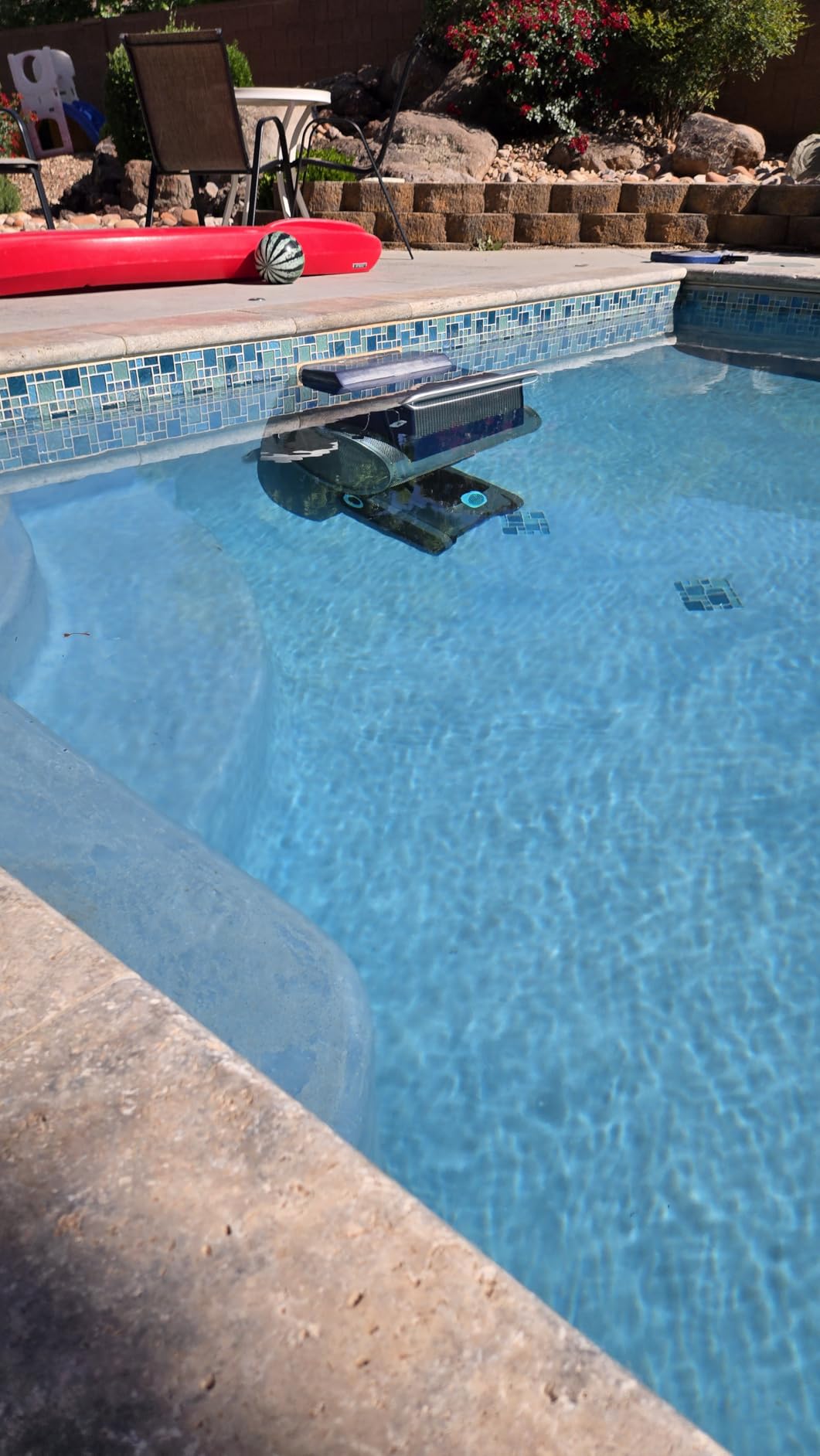
The waste bin is the single most underrated spec on a leaf-cleaning robot. The Scuba S1’s 3.5-liter capacity is roughly comparable to a medium kitchen colander, which means a typical 30-by-15-foot pool with moderate leaf fall can run a full 180-minute cycle without filling up. Pool owners who have used smaller-bin robots know how often the cycle ends prematurely with a “filter full” warning. The Scuba S1 reduces that frustration significantly.
Dual-Layer 180 Plus 3 Micron Filtration
Most mid-range robots stop at 180 micron filtration, which is fine for whole leaves but useless for tannins, pollen, and the fine debris that breaks off as leaves decompose. The Scuba S1 adds a 3 micron inner filter, which is what makes the water look genuinely clear after a cycle rather than just visibly debris-free. For pools near deciduous trees, this is the difference between a clean pool and a polished one.
Adaptive Path Planning for Real Pool Shapes
Leaves do not distribute evenly. They pile up in the deep end, against walls, near skimmer intakes, and in any spot where water circulation is weak. Random-pattern cleaners miss those piles. The Scuba S1’s WavePath navigation maps the pool floor and adjusts to flat, sloped, bowl, and diamond geometries, which means the robot finds and works through the leaf piles instead of scattering them.

What Owners Say
Verified buyer feedback consistently mentions two things: leaf pickup that holds up across full cycles, and noticeably cleaner walls and waterline compared with previous robots. A few owners do mention that the dual-layer filter takes a little extra rinse time, which is fair. Finer filters always trade some cleaning convenience for better water clarity.
Who Should Buy the Aiper Scuba S1
Buy the Scuba S1 if your pool collects leaves, twigs, and mixed debris regularly, if you have a 15-by-30 to 20-by-40 inground pool, and if you want stronger wall and waterline performance than a typical entry-level robot. For a deeper breakdown of how it performs across all four cleaning zones, see our full Aiper Scuba S1 review.
Check the Aiper Scuba S1 price on Amazon

Beatbot AquaSense 2 Pro: Best Premium Pick for Surface and Floor Leaves
The Beatbot AquaSense 2 Pro is the premium pick on this list, and it earns the spot for one specific reason: it is the only one of the three that cleans floating leaves on the surface before they sink. For pools surrounded by trees, that is genuinely useful.
5-in-1 Cleaning Including Surface Skimming
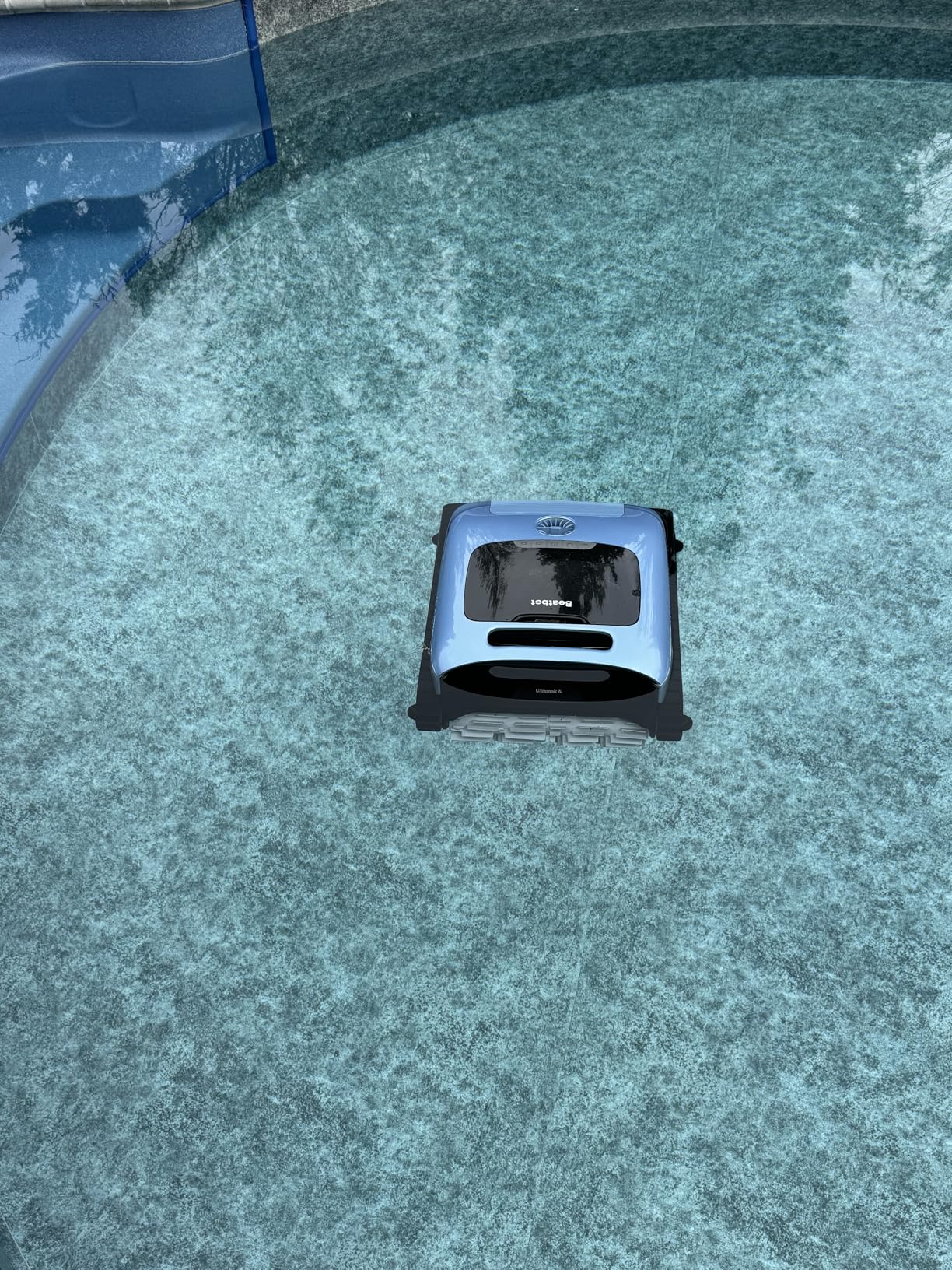
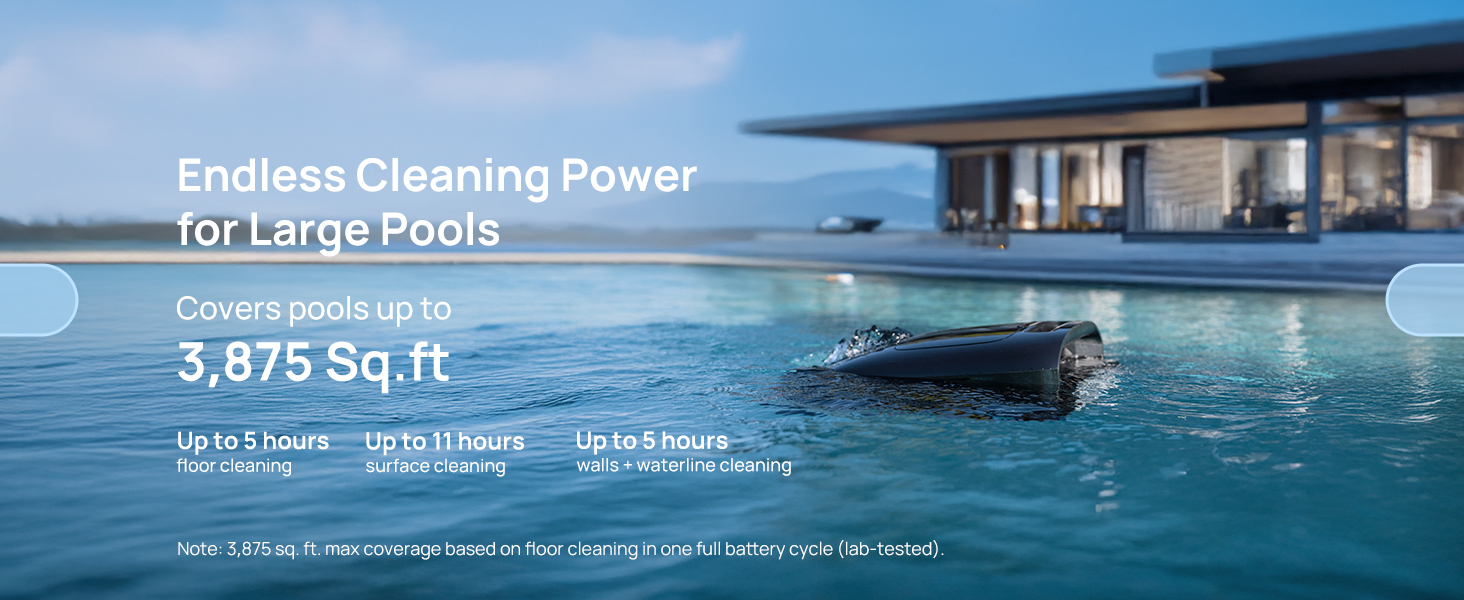
The AquaSense 2 Pro handles five cleaning jobs: pool floor, walls, waterline, water surface, and water clarification using natural crab-shell-derived clarifying agents. The surface mode is what separates it from every other cordless robot in this guide. With up to 11 hours of surface runtime on a single charge, the robot can clear floating leaves, pollen, and oils repeatedly throughout a day without needing to be retrieved.
For pool owners who currently spend twenty minutes with a leaf rake every morning during fall, this feature alone can justify the price.
Dual-Layer 150 Plus 250 Micron Filter and 3.7L Capacity
The filter system uses a 250 micron outer layer for large debris (whole leaves, twigs, branches) and a 150 micron inner layer for finer material. The 3.7-liter basket is slightly larger than the Scuba S1’s, and combined with the 5,500 GPH suction from the 9-motor system, it captures heavier leaf loads in a single pass.
CleverNav Navigation for Complex Pool Shapes
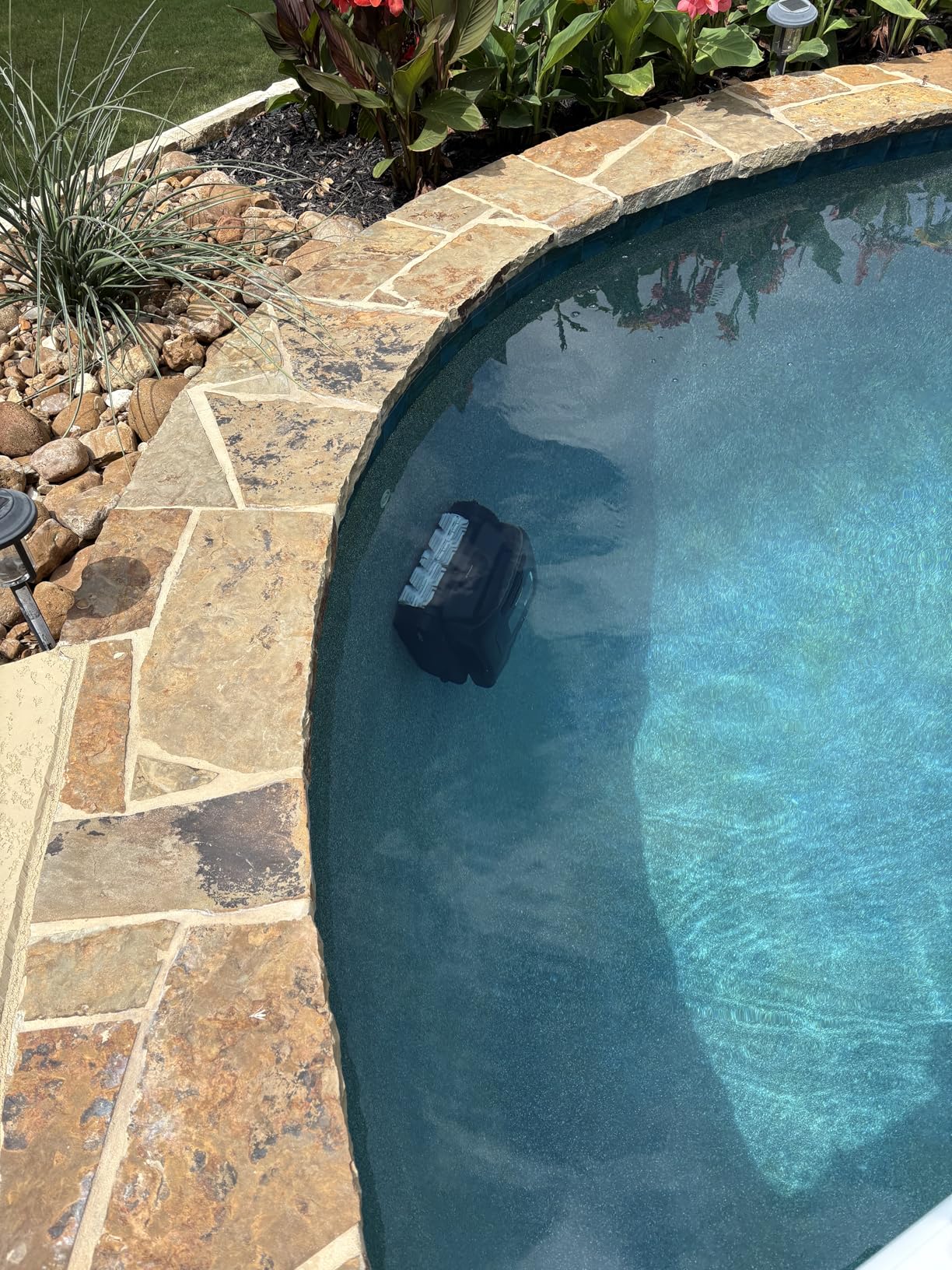
Where the Scuba S1 handles standard residential pool shapes well, the AquaSense 2 Pro adds 22 sensors and a 4-core CPU that map kidney shapes, freeform pools, multi-level layouts, and pools with steps and benches. The MultiZone app mode lets you define cleaning priorities per area, which matters more in larger or oddly shaped pools where leaf piles concentrate in specific zones.
Honest Limitations
The AquaSense 2 Pro is heavier than the Scuba S1, the price is significantly higher, and underwater app control is limited (Wi-Fi does not transmit through water, which is a physics constraint, not a design issue). For a small pool with a light leaf load, this is more robot than you need.
Who Should Buy the Beatbot AquaSense 2 Pro
Buy the AquaSense 2 Pro if your pool is in the 1,500 to 3,875 square foot range, if you deal with significant surface debris from surrounding trees, or if your pool has a kidney shape, freeform layout, or multiple steps and benches. For the full breakdown, see our Beatbot AquaSense 2 Pro review.
Check the Beatbot AquaSense 2 Pro price on Amazon
WYBOT C1: Best Value for Smaller Pools With Moderate Leaf Load
The WYBOT C1 is not the heaviest leaf specialist on this list, and we want to be honest about that up front. What it is, is the best value pick for buyers with smaller inground pools who deal with normal seasonal leaf fall rather than year-round heavy debris.
3,038 GPH Suction With Dual PVC Brushes
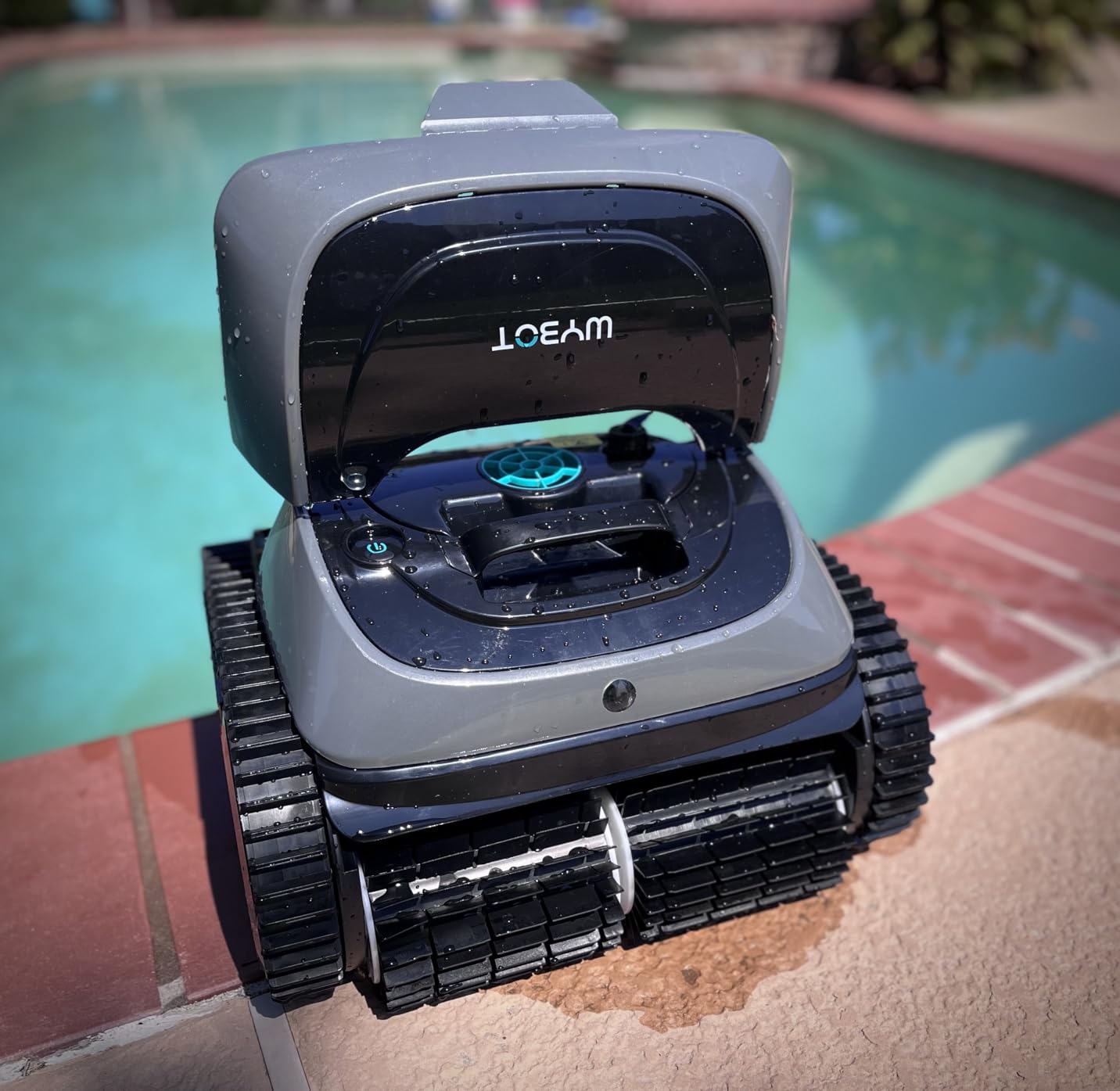
For its price tier, the C1’s 3,038 GPH suction is competitive. Combined with dual PVC brushes, it lifts settled leaves and finer debris on the pool floor without the sluggish performance you sometimes see in budget cordless robots. The single-layer 180 micron filter is not as deep as the dual-layer systems on the Scuba S1 and AquaSense 2 Pro, but for moderate leaf loads it is sufficient.
3L Top-Load Filter Basket
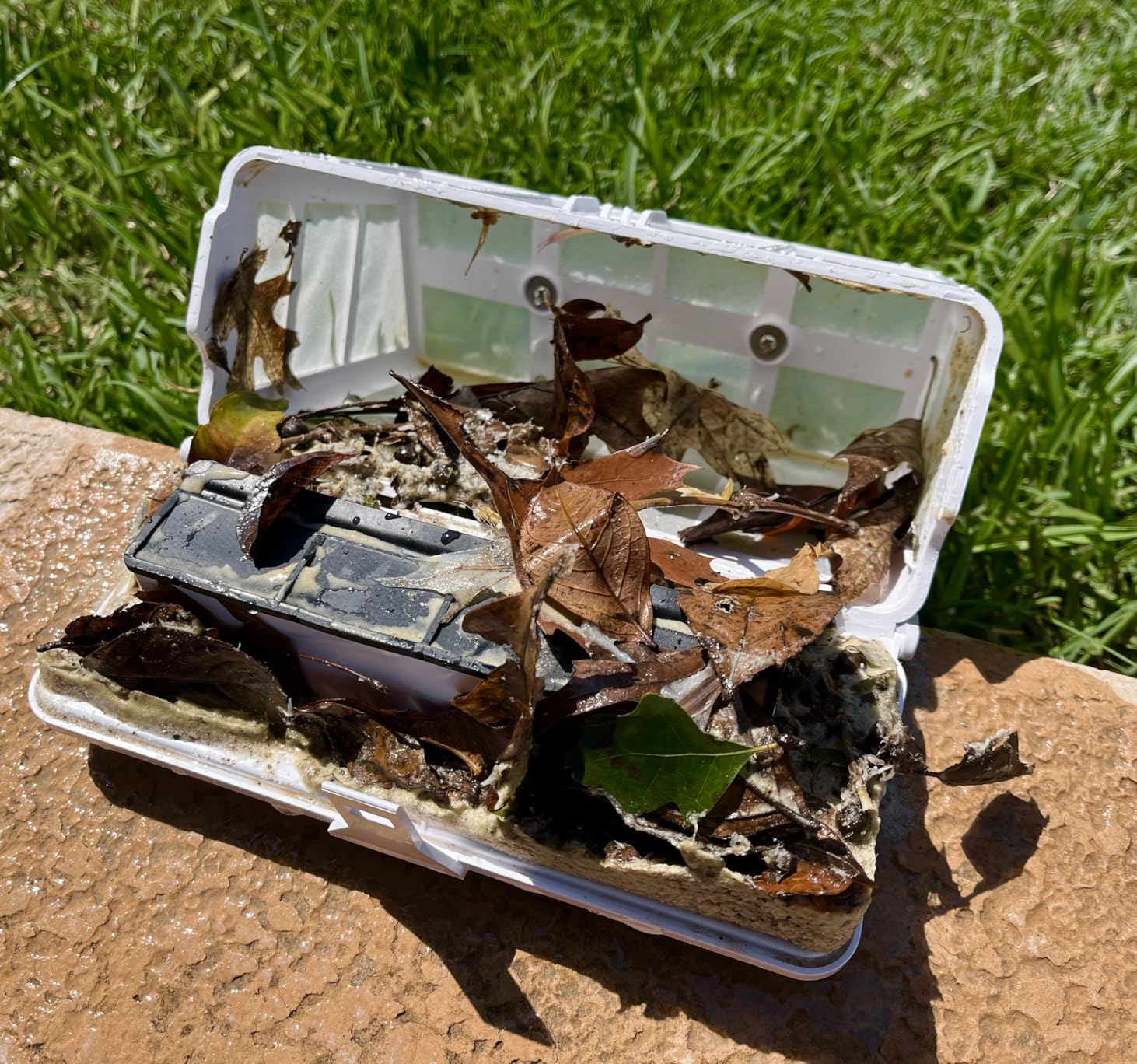
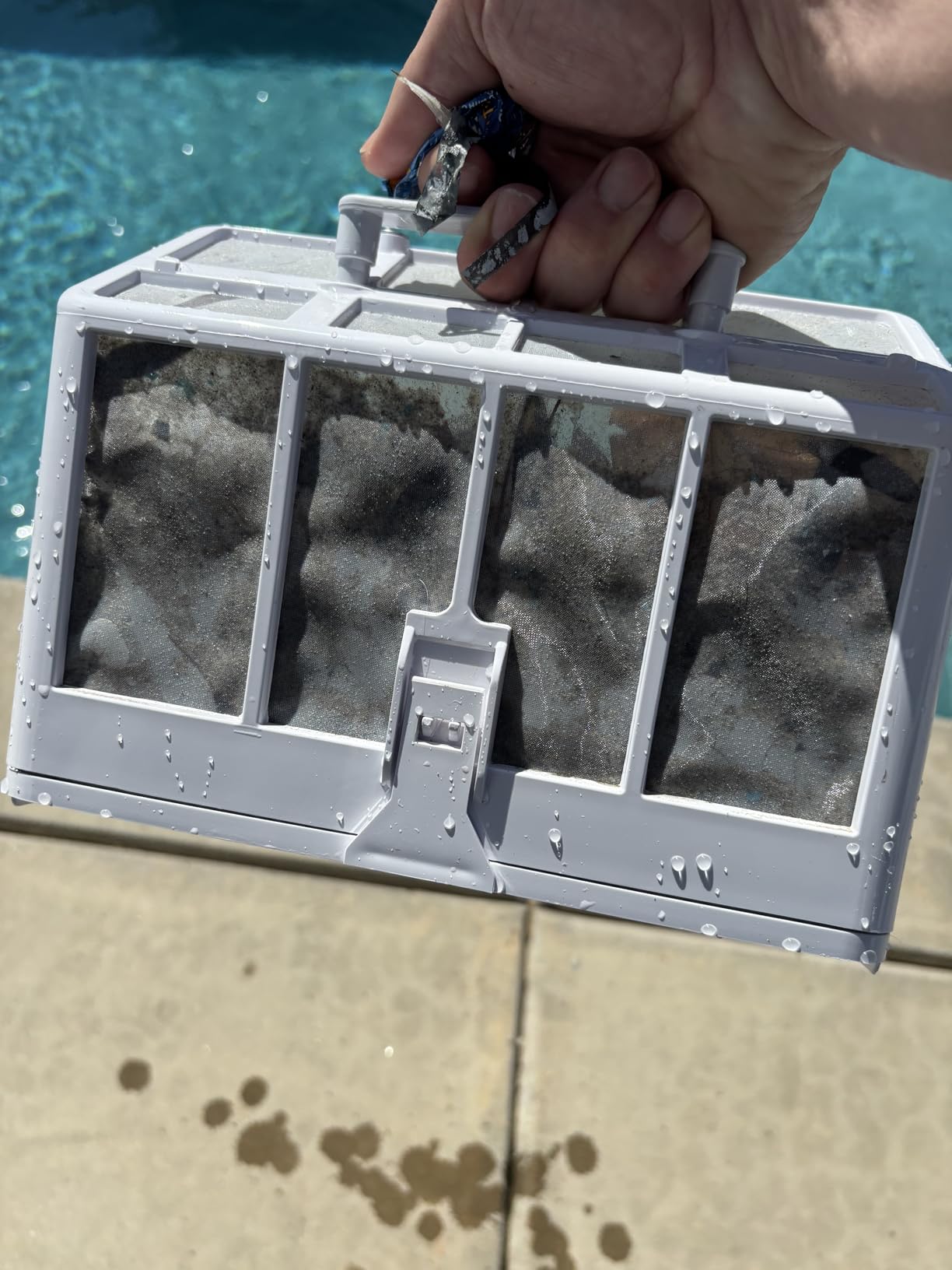
The basket is large enough for typical small-pool leaf cycles, and the top-load design makes emptying noticeably easier than side-load alternatives. For homeowners who clean the basket weekly during leaf season, that ergonomic difference matters more than the spec sheet suggests.
Coverage Up to 1,614 Square Feet
The C1 is sized for inground pools up to about 1,614 square feet with up to 150 minutes of runtime. That covers most 14-by-28 to 16-by-32 backyard pools comfortably. Pools larger than 1,800 square feet will benefit from the Scuba S1 or AquaSense 2 Pro instead.
Who Should Buy the WYBOT C1
Buy the WYBOT C1 if your inground pool is small to medium, if your leaf load is seasonal rather than constant, and if you want a smart cordless robot with app control and wall cleaning at a more accessible price than the premium options. Our full WYBOT C1 review covers the smaller-pool use case in detail.
Check the WYBOT C1 price on Amazon
Comparison Table: Which Leaf-Cleaning Robot Is Right for You?
| Feature | Aiper Scuba S1 | Beatbot AquaSense 2 Pro | WYBOT C1 |
|---|---|---|---|
| Best for | Leaf-heavy pools, mixed debris | Large or kidney pools, surface leaves | Small inground pools, moderate leaves |
| Coverage | Large residential pools | Up to 3,875 sq ft | Up to 1,614 sq ft |
| Runtime | 180 minutes | Up to 5 hr floor / 11 hr surface | 150 minutes |
| Waste bin | 3.5 L | 3.7 L | 3 L |
| Filtration | 180 µm + 3 µm dual | 250 µm + 150 µm dual | 180 µm single |
| Wall + waterline | Yes | Yes | Yes |
| Surface skimming | No | Yes | No |
| Suction | Strong | 5,500 GPH (9-motor) | 3,038 GPH |
| Pool shapes | Flat, sloped, bowl, diamond | Rectangle, oval, kidney, freeform | Standard inground |
| Price tier | Mid-to-upper | Premium | Value |
What to Look for When Buying a Robotic Pool Cleaner for Leaves
If you are shopping beyond these three models, here is the buying logic we use ourselves.
Match waste bin size to leaf volume. As a rough rule, plan on 1 liter of bin capacity for every 10-by-20 foot section of pool surface that sits under heavy tree cover. A small pool with one nearby oak does fine with 3 liters. A large pool surrounded by trees needs 3.5 liters or more.
Prioritize dual-layer filtration if water clarity matters. Single-layer 180 micron mesh handles whole leaves but lets fine debris pass through. Dual-layer systems with a 150 micron or 3 micron inner filter give you noticeably clearer water by the end of the cycle.
Verify that wall and waterline cleaning is real, not marketing. Some robots claim wall climbing but only touch the wall briefly before falling back. Look for “double-scrub waterline” or specific climbing-angle specifications (like the Scuba S1’s 90 degrees plus or minus 15 degrees) as a sign that wall cleaning is engineered, not aspirational.
Plan for runtime, not just coverage area. A 150-minute runtime is enough for a small pool. A 200 to 300 minute total cycle (or split modes like the AquaSense 2 Pro’s separate floor and wall sessions) is more appropriate for larger or debris-heavy pools.
Read the pool shape compatibility carefully. Most robots clean rectangles well. Kidney, freeform, and multi-level pools need explicit support. The Beatbot’s 22-sensor CleverNav and the Aiper’s WavePath adaptive planner are both designed for non-rectangular shapes; cheaper robots often are not.
How to Care for Your Pool Robot During Leaf Season
A robotic pool cleaner is only as effective as its filter. During heavy leaf months, three habits make a real difference.
Empty and rinse the filter basket after every cycle, not every few cycles. Wet leaves break down quickly, and a partly clogged inner filter cuts suction by up to 40 percent within a few sessions. Two minutes of rinsing extends the cleaning effectiveness of every cycle.
Pre-skim the surface manually before running the robot if your pool has a heavy layer of floating leaves. Even the Beatbot AquaSense 2 Pro’s surface mode works faster on a partially cleared surface, and the Scuba S1 and WYBOT C1 are floor and wall specialists that benefit from a quick manual pass.
Charge the robot in a dry, shaded location between cycles. Lithium batteries last longer when they avoid direct sun and hot surfaces, which matters when leaf season runs into late summer in many parts of the country.
For a deeper maintenance routine including filter replacement schedules and battery longevity, our full pool cleaner maintenance guide is worth bookmarking.
Frequently Asked Questions
What is the best robotic pool cleaner for leaves overall?
For most residential pools, the Aiper Scuba S1 is the best robotic pool cleaner for leaves in 2026. It combines a 3.5-liter waste bin, dual-layer 180 plus 3 micron filtration, and adaptive path planning that handles leaf piles in flat, sloped, and bowl-shaped pool floors without getting stuck.
Can a cordless robotic pool cleaner really handle heavy leaf loads?
Yes, but only if it has the right specifications. Look for a waste bin of at least 3 liters, dual-layer filtration, dual brushes or strong suction, and a runtime of 150 minutes or more. Cheaper cordless robots without these features tend to clog or stop mid-cycle in leaf-heavy pools.
Should I get a surface skimmer or a floor robot for leaves?
If your problem is mostly floor debris (sunken leaves, sediment, twigs at the bottom), a floor and wall robot like the Aiper Scuba S1 is the right answer. If you also fight floating surface leaves daily, the Beatbot AquaSense 2 Pro’s surface mode handles both, but at a premium price.
How often should I empty the filter basket during leaf season?
Empty after every cycle. Wet leaves break down quickly, and a clogged filter reduces suction enough to leave debris behind. Two minutes of rinsing keeps the robot performing at full strength.
Is the WYBOT C1 strong enough for leaf cleaning?
For small to medium inground pools with seasonal leaf fall, yes. The 3L basket and 3,038 GPH suction handle moderate leaf loads well. For year-round heavy debris from oaks, sycamores, or pines, step up to the Aiper Scuba S1.
Does pool shape affect which robot I should buy?
Significantly. Standard rectangles work with almost any cleaner. Kidney shapes, freeform pools, and pools with steps or benches need explicit support, like the Beatbot’s 22-sensor CleverNav or the Aiper’s WavePath adaptive planner.
Final Verdict: Which Should You Buy?
If you want a single recommendation for a leaf-heavy pool, buy the Aiper Scuba S1. It is the most balanced robotic pool cleaner for leaves in 2026 across price, performance, and filtration depth, and it covers the floor, walls, and waterline well enough that most owners do not feel the need to upgrade further.
If you have a large or kidney-shaped pool with constant surface leaves, step up to the Beatbot AquaSense 2 Pro. The surface skimming mode and 5-in-1 versatility justify the higher price for the right pool layout.
If your pool is smaller and the leaf load is seasonal rather than constant, the WYBOT C1 is the smarter buy. You get the cordless convenience, app control, and wall cleaning at a more accessible price, and the spec sheet matches the real-world demands of a smaller inground pool.
Whichever you pick, look for the four leaf-cleaning fundamentals: bin capacity, filtration depth, suction strength, and adaptive navigation. Get those right, and leaf season becomes a non-event instead of a weekly chore.
Compare all three picks on our main buying page for the latest pricing and direct Amazon links.